

The Wild Spotter detection and outreach program is expanding its impact with the addition of two major federal partners: the National Park Service (NPS) and the U.S. Fish & Wildlife Service (USFWS). Through new cooperative agreements with the University of Georgia’s Center for Invasive Species and Ecosystem Health (UGA Bugwood Center), select national parks and wildlife refuges are now being added to the national Wild Places catalog—empowering more citizens to help protect the lands and waters they care about most.
“We are thrilled to work with the National Park Service and the U.S. Fish & Wildlife Service to connect more people with meaningful action in conservation,” said Chuck Bargeron, Director of the UGA Bugwood Center. “Wild Spotter is more than just an app—it’s a way to mobilize a national community of citizen scientists to help protect America’s most treasured landscapes.”
With NPS and USFWS now fully engaged, Wild Spotter is gaining critical momentum—building on the foundation established by the USDA Forest Service, Wildlife Forever, and the UGA Bugwood Center, whose partnership launched the first Wild Places across national forests and grasslands.
A Campaign Rooted in Community Science
Wild Spotter is a community science initiative designed to help the public detect and report aquatic and terrestrial invasive species using a free mobile app. All verified reports are submitted to EDDMapS (Early Detection and Distribution Mapping System), a trusted national database that supports early detection and rapid response (EDRR)—the most efficient and cost-effective strategy for managing invasive species.
With a simple call to action—Join. Download. Identify. Map. Protect.—the program gives visitors, volunteers, and citizen scientists the tools to make a real difference in the fight against invasive threats.
“What makes Wild Spotter so effective is that it gives the public a voice in protecting the places they care about,” said Jennifer Sieracki, Ph.D., Invasive Animals Ecologist with the National Park Service. “Whether you’re a frequent hiker, a weekend camper, or simply a supporter of our parks, this is a tool that turns awareness into action.”
What Participating Units Receive
Public land units designated as Wild Places receive tailored support, including:
- Customized integration into the Wild Spotter app with clearly defined boundaries and base maps
- Target invasive species lists for early detection and monitoring
- Educational materials and outreach tools to engage visitors and volunteers
- Training resources for park and refuge staff and community science participants
To support this expansion, a consistent social media presence (@mappinginvasives on Facebook and Instagram) began in July 2025, and updated outreach materials are in review. The 3rd Annual Wild Spotter Invasive Species Ambassador Training is also set for February 2027 in Lake Guntersville, Alabama, offering unit managers and staff unique training focused on local engagement, user outreach and retention, and measurable impact.
“Wild Spotter puts invasive species detection in the palm of your hand,” said Aaron Martin, National Invasive Species Program Coordinator for the National Wildlife Refuge System at the U.S. Fish & Wildlife Service. “This partnership aligns perfectly with our mission to protect ecosystems and ensure their future prosperity by engaging the public in hands-on conservation.”
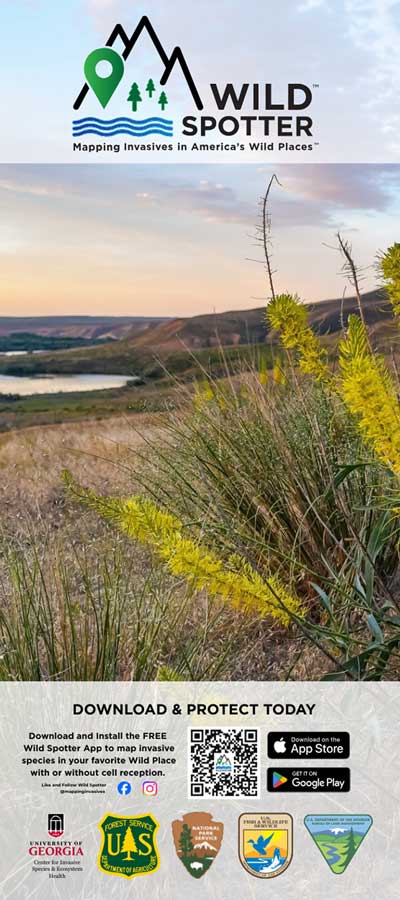
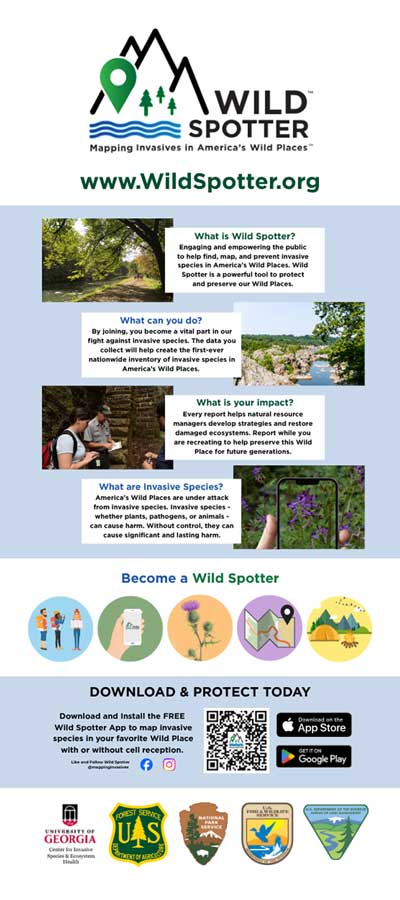
Retractable banners displayed at select National Park Service units promote awareness of the Wild Spotter app, encourage downloads, and impact citizen science engagement. This promotional effort also conveys to visitors to America’s Wild Places that the U.S. Forest Service, National Park Service, U.S. Fish & Wildlife Service, and Bureau of Land Management are a collective team in stewarding our natural landscapes.
What Is a Wild Place?
A Wild Place is any public land or water body where invasive species detection is supported through Wild Spotter. It could be a national park, wildlife refuge, forest, community green space, or urban trail—but above all, it’s a place people care about.
As of February 2026, 12 National Park Service units and 7 U.S. Fish & Wildlife Service refuges have joined the network, including:
- Rocky Mountain National Park (CO)
- Timucuan Ecological and Historical Preserve (FL)
- Assateague Island National Seashore (MD, VA)
- Cabeza Prieta National Wildlife Refuge (AZ)
- Kenai National Wildlife Refuge (AK)
- Klamath Basin Refuges (CA)
These units join 154 national forests and 20 national grasslands previously established as Wild Places through the USDA Forest Service partnership, as well as the 31 national monuments and 19 national conservation lands managed by the Bureau of Land Management.
Why It Matters
Invasive species are one of the greatest threats to the health of ecosystems, cultural resources, and outdoor recreation opportunities on public lands. Wild Spotter provides a cost-effective, scalable solution to increase early detection, response capacity, and public engagement.
The benefits include:
- Expanded Detection Capacity – More eyes on the ground through trained volunteers and visitors
- Cost-Effective Management – Prevention and early action reduce widespread and costly impacts
- Tailored Integration – Each unit receives a customized digital and outreach presence
- Support for Land Managers – Provide real-time data to make informed management decisions
- Public Engagement – Builds long-term stewardship and science literacy
- Lasting Impact – Enhances ecological resilience across diverse landscapes
Whether a Wild Place begins with a simple species watch list or evolves into full-scale volunteer monitoring and management, Wild Spotter offers flexible, high-value participation for resource managers.
Join the Wild Spotter Network
Wild Spotter is live, expanding, and welcoming new involvement from both public land managers and everyday citizens. With NPS and USFWS now joining USDA Forest Service in this national effort, the momentum to detect and manage invasive species is stronger than ever.
To join the Wild Spotter network, visit www.wildspotter.org.